

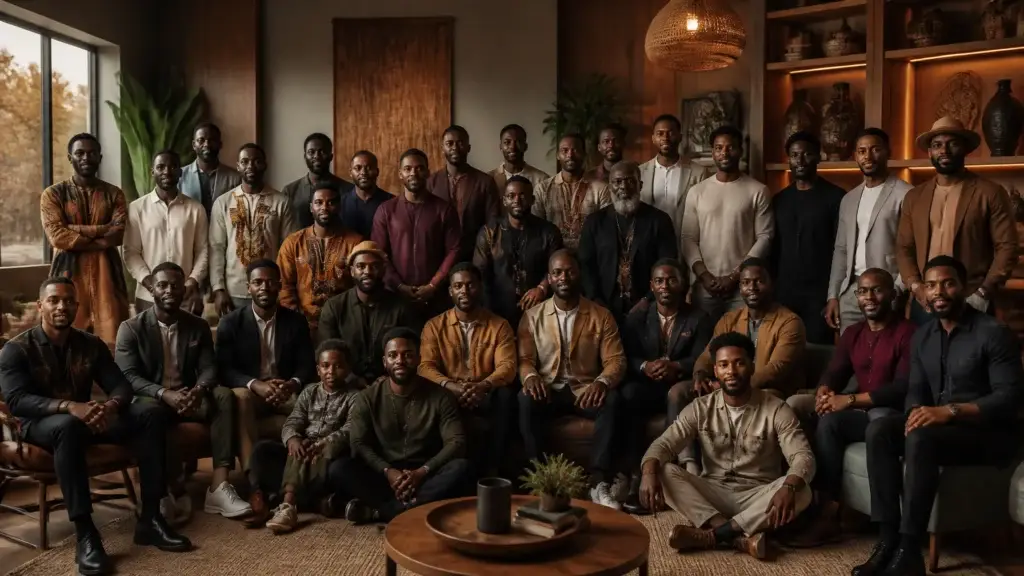
For too long, the narrative of mental health for Black men has been framed through a lens of deficit, pathology, and isolation. Traditional clinical models often prioritize the individual in a vacuum, asking “What is wrong with you?” rather than acknowledging the systemic and historical forces at play. At the Becoming Institute, we are shifting this paradigm by centering Afrocentric healing: a framework that honors the interconnectedness of our stories, our families, and our ancestors. By integrating the ancient wisdom of Ubuntu, we are creating a space where healing is not just a personal victory, but a collective restoration. At the Becoming Institute, our Afrocentric healing for Black men model reframes mental health as a communal, spiritually grounded journey rather than an individual deficit.
The Ubuntu Philosophy: “I am because we are”
At the heart of our approach is the South African philosophy of Ubuntu. Often translated as “I am because we are,” Ubuntu challenges the Western obsession with rugged individualism. It posits that our humanity is inextricably bound up in the humanity of others. In the context of trauma recovery, this means that the isolation often felt by Black men: compounded by systemic anti-Black racism and the “strong man” trope: can only be truly dissolved through community.
Healing is not a solitary trek; it is a return to the circle. When we embrace Ubuntu, we recognize that the wellness of one man contributes to the strength of the entire community. This philosophy forms the foundation of our work, moving us from the clinical coldness of “patient and provider” toward a model of communal stewardship and shared humanity.

Why Western Models Fall Short for Black Men
Traditional psychotherapy often fails to account for the unique stressors that Black men navigate daily. When a clinician ignores the weight of racial profiling, workplace discrimination, or the historical trauma of colonization, they miss the core of the experience. These models are often designed around “regulation” and “symptom management” rather than the restoration of dignity.
Afrocentric healing, by contrast, starts with the assumption of wholeness. It recognizes that the symptoms we see: depression, anxiety, hyper-vigilance: are often normal responses to abnormal, oppressive systems. By centering Afrocentric ways of knowing, we provide a culturally safe environment where men don’t have to “code-switch” to be heard.
Internalizing this shift is critical. As we have explored in our previous discussion on why Ubuntu matters in trauma recovery, the transition from individual to collective focus is the turning point for sustainable recovery.
The Practice of Afrocentric Healing: What to Expect
In practice, Afrocentric healing involves more than just conversation. It is an immersive process that engages the mind, body, and spirit. Within the Becoming Institute’s framework, this includes:
- Healing Circles: Moving away from the hierarchy of the “expert” and the “layperson” to create a space of mutual accountability and support.
- Narrative Reclamation: Deconstructing the ego-driven illusions of race and culture to find the true self beneath the societal labels.
- Somatic Awareness: Recognizing how the body carries the “weather” of racism and using movement, breath, and presence to release intergenerational stress.
This approach is grounded in research from organizations like TAIBU Community Health Centre, which has documented the profound impact of Afrocentric healing circles in disrupting the cycles of systemic trauma.

Anchored: A RAISE-Funded Path to Wholeness
We are proud to announce the launch of Anchored, a fully funded mental health initiative designed specifically for Black men. Launching on August 17th, 2026 and supported by the RAISE initiative, Anchored is our response to the critical need for evidence-based, culturally safe trauma recovery support.
Anchored is not just another “support group.” It is a 12-month journey that utilizes the Becoming Method® to help men move from the margins of their own lives back to the frontlines of their families and communities. For fathers, in particular, this work is a public health priority. As noted in our feature on why culturally safe trauma recovery for Black fathers matters, when a father heals, he alters the trajectory of his entire bloodline.
Reclaiming the Role of the Nurturer and Protector
The goal of our Afrocentric framework is to liberate the Black masculine identity from the constraints of colonization. For too long, Black men have been funneled into systems that demand hardness and suppress vulnerability. Ubuntu teaches us that true strength lies in our ability to nurture, to connect, and to be “sharpened” by our brothers.
The provincial government recognized the potential of Anchored, supporting us in developing the app that guides our cohorts through their 8-week healing and restoration journey. But as we spoke with the community about what is truly needed, the program evolved. We moved from a simple 8-week program to a stacked, multi-level design built to meet Black men exactly where they are.
Our journey now follows a comprehensive path:
- Phase 1: On-boarding & Family Engagement. Led by case managers, this phase focuses on program orientation, trust-building, psychotherapeutic assessment, and treatment planning.
- Phase 2: Intensive Trauma Recovery. Our trauma recovery specialists attend to intergenerational trauma, the legacy of colonization and enslavement, and the everyday experiences of anti-Black racism, exclusion, and policing.
- Phase 3: Transformation & Purpose. Resident psychotherapists and coaches support men through recovery transformation and purpose-driven personal development.
- Phase 4: Communal Homecoming. This is the phase we truly love—weekly Zoom meetings and monthly in-person gatherings centered on truth-telling, conscious forgiveness, reconciliation, and returning to a friendship with self.
Once the program is complete, our continuing care team remains available to help maintain balance and regulation whenever it’s needed.

Step Into Your Becoming
Healing is a radical act of self-determination. It is the refusal to be defined by what has been done to you and the choice to be defined by who you are becoming.
Anchored was built for this moment—for Black men ready for a different kind of mental health support, for creatives who want to help shape the story, and for community leaders who know healing expands when it is held collectively.
If Anchored speaks to where you are right now, here are three ways to step in:
- Ready to begin your journey? Sign up to join a cohort
- A storyteller, artist, or creative with something meaningful to contribute? Apply to become a content creator
- Leading in community and want to help broaden access? Partner with us to expand the reach
Wherever you are starting from, you are welcome here.
